I'M NOT REALLY HERE


I’M NOT REALLY HERE is my third young adult novel. I’m thrilled to reveal it’s cover and I am so in love with it. The cover was illustrated by Tori-Jay Mordey, an established First Nation, Indigenous Australian artist and illustrator based in Meanjin/Brisbane, and designed by Hana Kinoshita Thomson (or Hana Underthetree).

The protagonist of this story is Jonah, and he’s probably the most personal character I’ve written. With each story, I inject parts of myself into the main characters, but with Jonah, those parts felt like some of the most intimate, locked away parts that I keep very close to my chest. Jonah is an a gay Aboriginal boy, who is an aspiring writer and struggling with his body image, but also desperate to have real friendships - something he’s never really known before. I can’t wait for you to meet him.

I’M NOT REALLY HERE out September 3rd, and I’ll talk a bit more about it later. For now, here’s a rather great blurb:


A wonderful coming-of-age queer romance from the multi award-winning author of The Boy from the Mish. Jonah is the new kid in a country town. When he joins the local footy team to be closer to his crush, Harley, it feels like a fresh start – but he still has to navigate new friendships, an unresolved past, and the same body image issues he's always had.

Footsteps approach behind me. I turn and see an Aboriginal boy arriving at the doorway. He's tall, taller than me. He's got curly hair. His body is fit. His chest is chiselled and bare and he's wearing only football shorts.
When 17-year-old Jonah arrives in a new town – Patience – with his dad and younger brothers, it feels like a foreign place. A new town means he needs to make new friends - which isn't always easy. Especially when he's wrestling with his body image, and his memories of his mother.
When he joins the local footy team so he can spend more time with his new crush, Harley, he feels like he's moving closer to something good. But even though he knows what he wants, it doesn't mean he's ready.
Emotionally compelling, honest and featuring warm and authentically vulnerable characters, I'm Not Really Here is a beautiful novel from an internationally acclaimed bestselling Indigenous author about navigating family and friendships, and finding a way through grief towards love.


NSW Premier's Literary Awards 2024

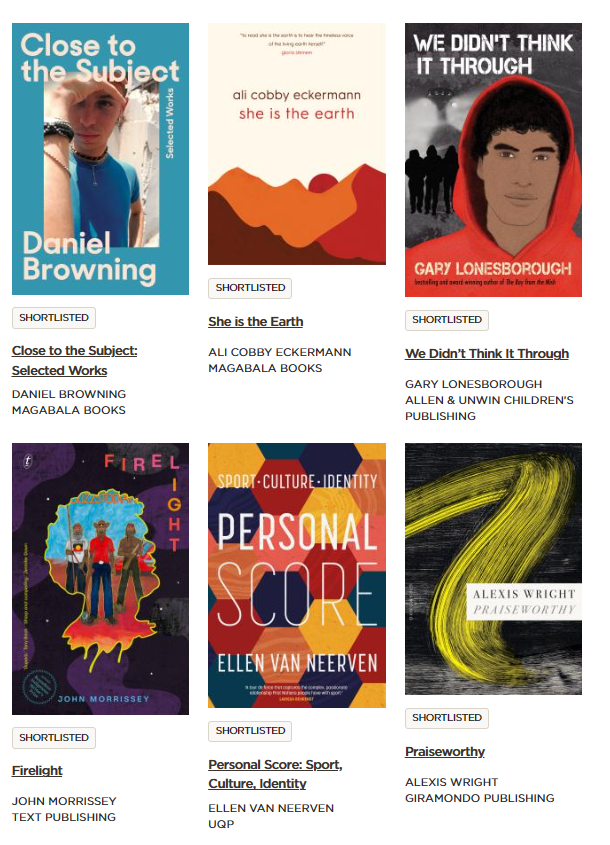
WE DIDN’T THINK IT THROUGH has been shortlisted for 2 awards at the NSW Premier’s Literary Awards 2024!!! The Ethel Turner Prize for Young People's Literature & The Indigenous Writers’ Prize!

Indigenous Writers' Prize

Judges' comments

We Didn’t Think It Through is a young adult fiction novel. Gary Lonesborough has crafted a razor-sharp narrative, offering wit and warmth in the otherwise nasty setting of juvenile incarceration. Lonesborough’s characters are imperfect, loveable and deeply relatable to First Nations readers. This is a masterfully told tale that draws together larger story-threads of injustice and systemic oppression whilst never losing the immediacy and power of the central narrative.

Lonesborough writes with a finesse and charm that sticks with you. The story is told through a pitch-perfect young adult voice which is accessible to all readers, young and old alike. This is an extraordinary accomplishment. As Lonesborough’s sophomore offering in the YA genre, the judges recognise this as the work of a writer coming into the fullness of his storytelling powers.

Ethel Turner Prize for Young People's Literature

Judges' comments

Removed from his parents as a young child, Jamie has grown up in small-town NSW with his aunt and uncle, resentful of his parents’ apparent abandonment, heartsick at the low expectations his town has of young Aboriginal men, and frustrated with his own inertia. When Jamie and his mates make a rash decision one night, it’s as though he’s fallen into the town’s self-fulfilling prophecy. Will the love of his family and the promise of reconnection be enough to help him out the other side? Will the stories that have started to spill out of him allow him for once to be the protagonist?

With direct prose, and poetry drawn directly from the main character’s soul, Gary Lonesborough draws the reader into the raw and heartfelt experience of a young man struggling against the multiple biases stacked against him. It is a privilege to be taken so intimately inside his story, and guided through the urgent and timely themes with the author’s sure hand and lightness of touch.

Second book

Having a book published was a dream I’d had since I was a kid. For years, I tried to write a novel. I’d stopped and started countless first drafts for various stories - contemporary, fantasy, horror, dystopian fiction. I’d once written 50000 words of a dystopian fiction novel called ‘The Cage’. It was after I’d reached the 50k word mark I realised I was writing a story that was too big for me to tell right now, and worse, I was beginning to think I’d written the story from the wrong character’s perspective!

It took years for me to build the skills and the stamina to write my first book. I assumed I could do it all again with ease when it came to writing the second. I did it once, I could do it again, right? Well, yes, but I came to learn that it’s not that simple. Each story is different, and in July, my second novel was published - WE DIDN’T THINK IT THROUGH.

In 2018, I began facilitating an Aboriginal program at a juvenile justice centre in western Sydney, as part of my role at an Aboriginal organisation. I would go in each Tuesday afternoon and bring in cultural educators, Indigenous youth services and elders, with the aim to teach things to the boys detained there, help them reconnect with their cultural identities and learn about the support they can access when they get released. My favourite part of this job was spending time with the boys, getting to know them, hearing their stories and offering advice. I was stuck in a wrestle between the limitations of my role and this internal need to be the person who helps everyone. It took me a long time to realise I’m just one person doing one job, and I could only help where I could, but it was a frustration I’d never known before. I was a young Aboriginal man in a position to potentially help other young Aboriginal men who had landed in difficult positions, but there was only so much I could actually do outside of the worrying. There were a couple boys I had worked with individually, one for the period of three years. As I worked with them, I was still writing and this character began forming in my mind, who would later become Jamie. I didn’t really know until after I’d finished the book that this was how I could help - I could write a fictional story about the resilience I saw in those boys, a story inspired by theirs and a story that gave those boys a voice - a story that might shine a light on the overrepresentation of Aboriginal youth in juvenile detention and the lack of meaningful support available to them. I realised a long time ago that I am no activist. But writing is my activism. Writing is how I say the things I want to say.

The drafting process for my first book was pretty breezy. I could see the whole story in a series of scenes in my head. It felt like the words were right there at some cliff behind my ears, falling into darkness and I had to write them all down before they disappeared. Within a few months, I’d had the whole structure, the character arcs and the plot points down in a pretty decent way.

When it came time to sit down and start on my second book, I thought it would be the same, that over the course of a first draft it would all come together, that it would only take a couple months to write. I’d let Jamie grow in my head. I’d laid in bed at night, thinking over how his story would become instead of falling asleep. I knew him pretty well, and I had just signed a contract for my first book. I was feeling this overwhelming sense of achievement. I had actually arrived at my dreams, and now it was time to jump higher.

I started writing a first draft for WE DIDNT THINK IT THROUGH in 2019, which was called ‘Joyride’ at the time. The first 20k words flowed well, but then these new doubts started to step into my life: This isn’t as good as my first book… I don’t know where this is going… I can’t write a whole book again.

After a few months of writing, I took a break to edit ‘The Boy from the Mish’, then returned to the manuscript. I finished a 75k word first draft, and unfortunately, I didn’t love it. I landed a residency at the Varuna Writer’s House in Katoomba, which I was due to take in June of 2020 while I was in the drafting stage. This residency was delayed due to covid until November 2020, which turned out to be a real blessing in disguise. During my week there, I learned a lot about the story I thought I was writing, and found a new wind in my second novel. I discovered that I needed to focus more on the family relationships Jamie has and a new thread grew within the story - a story about reconnecting with family. Over the next months, I rewrote the ending chapters, then went back to the middle and rewrote the rest. There was still a lot of work to do, but I had found joy in writing this story again, and for a time, I was able to keep those doubts out of my head.

The edits for this book were tough. I struggled to come up with a title for the longest time, and I probably went through three or four potential titles before I landed on the final one. This edit was harder than my first novel because I was dealing with many big issues and trying to tell a story that kept the character’s journey central, while also saying what I wanted to say. The edit was longer as well, and when I received an email from my publisher that I would need to complete another structural revision, I felt kind of hopeless. I wasn’t sure what more I could do. I thought I’d done it - that the story was good enough. But there were all these issues that weren’t working yet, and I could only see those issues after taking a break from the manuscript. Jamie’s characterization was inconsistent. Some characters weren’t fleshed out as well as they could be. And the middle section of this story was enormous and slow and filled with too many characters who only show up for a scene or two. There was a point during the edit where I thought I was not a good enough writer to get this book in the shape it needed to be, where I thought I wouldn’t be able to realise the vision I saw in my mind. I thought I might be a one-book wonder.

Surely, it shouldn’t be this hard if I was a good writer.

I got back to work with some expert guidance and suggestions from my publisher and editor, and it was a real team effort to get this book in shape. Ultimately, I am very pleased with what the final draft became. I love Jamie, the way his story unfolds, the infusion of poetry and balanced way I was able to say what I wanted to say without being too loud.

As I approached the release date, it was already apparent that my first book, The Boy from the Mish, had exceeded all my expectations. It had sold very well, been shortlisted for numerous awards (even winning a couple), and had sold international rights, audio rights and film/tv rights. As the release date approached for We Didn’t Think It Through, new doubting thoughts began to intrude again.

It’s not gonna do as well as Boy from the Mish.

No one’s going to read it. No one cares.

No one’s going to like it.

It’s not an explicitly queer story, so I am going to lose all my readers.

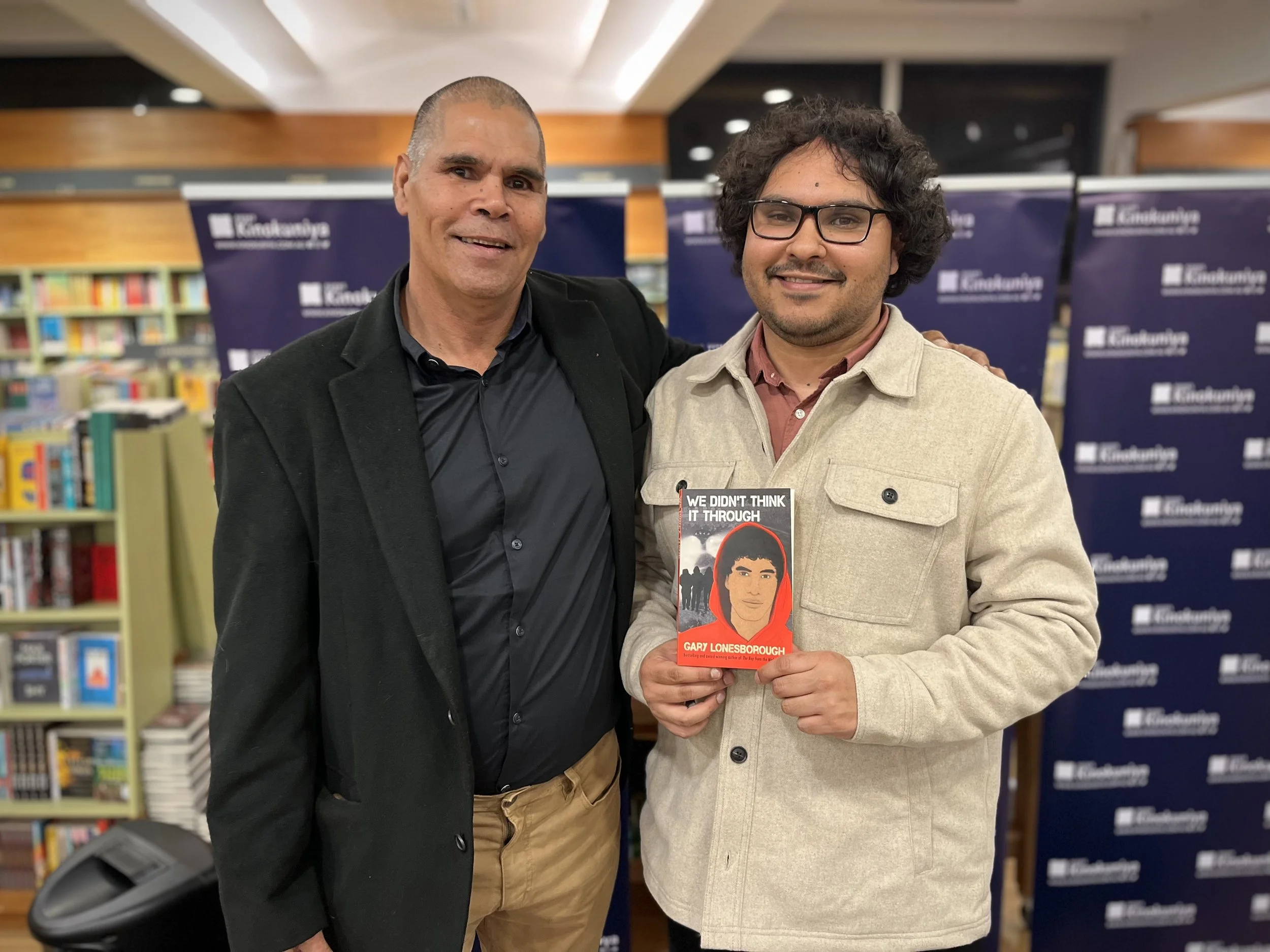
The doubts didn’t leave until I launched We Didn’t Think It Through in Sydney on the 6th of July 2023. I was able to present my book to the world, surrounded by friends and even my dad, who had made the trip up from Bega. As I read a small passage from the book, I felt something about this book that I hadn’t felt in a long time: this is actually pretty good. I’m proud of the work I did.

It was bittersweet, knowing how hard me and my publisher and editor worked to get this book to where it is, knowing how much worry and fear I had for my talents as a writer and the success of the book. But it is a book. A second book. I am a person who has had multiple books published, and that’s something I am extremely proud of.

The post-release depression hit hard. I knew it was coming, because it came after the release of my first book, but it was still a difficult road to travel. The basis of this depression is coming down from the high that release-week brings, when everyone wants to talk to you, everyone is saying they want to read it, social media notifications are popping off because everyone is excited and hyping your work. After a couple weeks, it’s the complete opposite. It’s part of the job and something I’ll try to be better prepared for next time (but maybe post-release depression deserves it’s own blog!).

I realise now that I can’t compare my current project to previous ones. Each story is different. Each editing experience is different. That’s how it is. I’m hoping when the time comes for my third book I will be more resilient, more confident, and not so caught up on how it will compare to my previous novels. Each new thing is a new thing. And in the end, I get to do what I always dreamed of doing. I get to write stories. I love writing stories. Writing is fun for me. Writing doesn’t feel like work. It’s not a burden. It’s an inherent part of who I am. Whether people read my stories, or like them as much as the last one, or like them more, that shouldn’t matter to me. Each time I write, I am writing something real, I am creating a character and creating a world. Each time it is new and fresh and I can’t dwell on what came before.

We Didn’t Think It Through is out in the world. It belongs to the world now, and it is time for me to move onto the next thing.

Berlin

I was super lucky to be invited to Berlin for a week to attend the ilb (international literature festival of Berlin) in September 2023. I was to do two events - 2 panel discussions about The Boy from the Mish and 2 school visits.

I had never been overseas before. I’d never been outside the eastern half of Australia before! It was all very exciting. I had a 9:30pm flight out Sydney. I was in the window seat (not that I could really see anything in the night time anyway) and I had a young child sitting beside me with her father, so I had to make sure the movies I watched didn’t have anything naughty in them. The four hour stopover in Doha was also really exciting. I didn’t really do anything, just had some food and listened to music via my AirPods, and I was extremely tired, but it was still very exciting. It took roughly 25 hours to get to Berlin. The thing that surprised me most about the lengthy journey was how dirty I felt when I arrived at my destination. The way my feet felt in my shoes, never leaving them between when I left my house in Sydney to arriving at my hotel in Berlin, was the worst.

I was very lucky to have an amazing assistant during my time at the festival, who helped me learn so much about Berlin and politics and the education systems. I was one of only a couple writers flown in from Australia, and I thoroughly enjoyed my two festival sessions. Speaking to a full auditorium of German secondary students, I could hear some whispers in the crowd during my events. I thought to myself that they must be translating for their friends beside them, so maybe I should speak a little slower and more clearly. Everyone I came across in Berlin spoke English, but it was really cool to sit in a restaurant or at a bar and hear German conversations taking place around you.

After my events at the festival, I would sign copies of The Boy from the Mish that were available to purchase for students. Students asked me questions as I signed for them - questions about being a writer, questions about being queer, questions about being Aboriginal. I was really amazed by how curious everyone was to learn more about Aboriginal people and culture, and how interested they seemed in what I had to say.

I’m very lucky in the fact that I have a few international friends. One of my Swedish friends made the trip from Sweden to visit me for two days. It was the first time we’d seen each other in 8 years, but it felt like no time had passed at all. We caught up on eight years of life updates over beer and dinner. On my last day in Berlin, we walked for 8 hours straight all over Berlin exploring. I clocked over 36000 steps in one day, and my legs certainly felt like it! We got to see Checkpoint Charlie, the Berlin cathedral, the east side gallery, the Brandeburg Gate and so many other parts of Berlin in those eight hours.

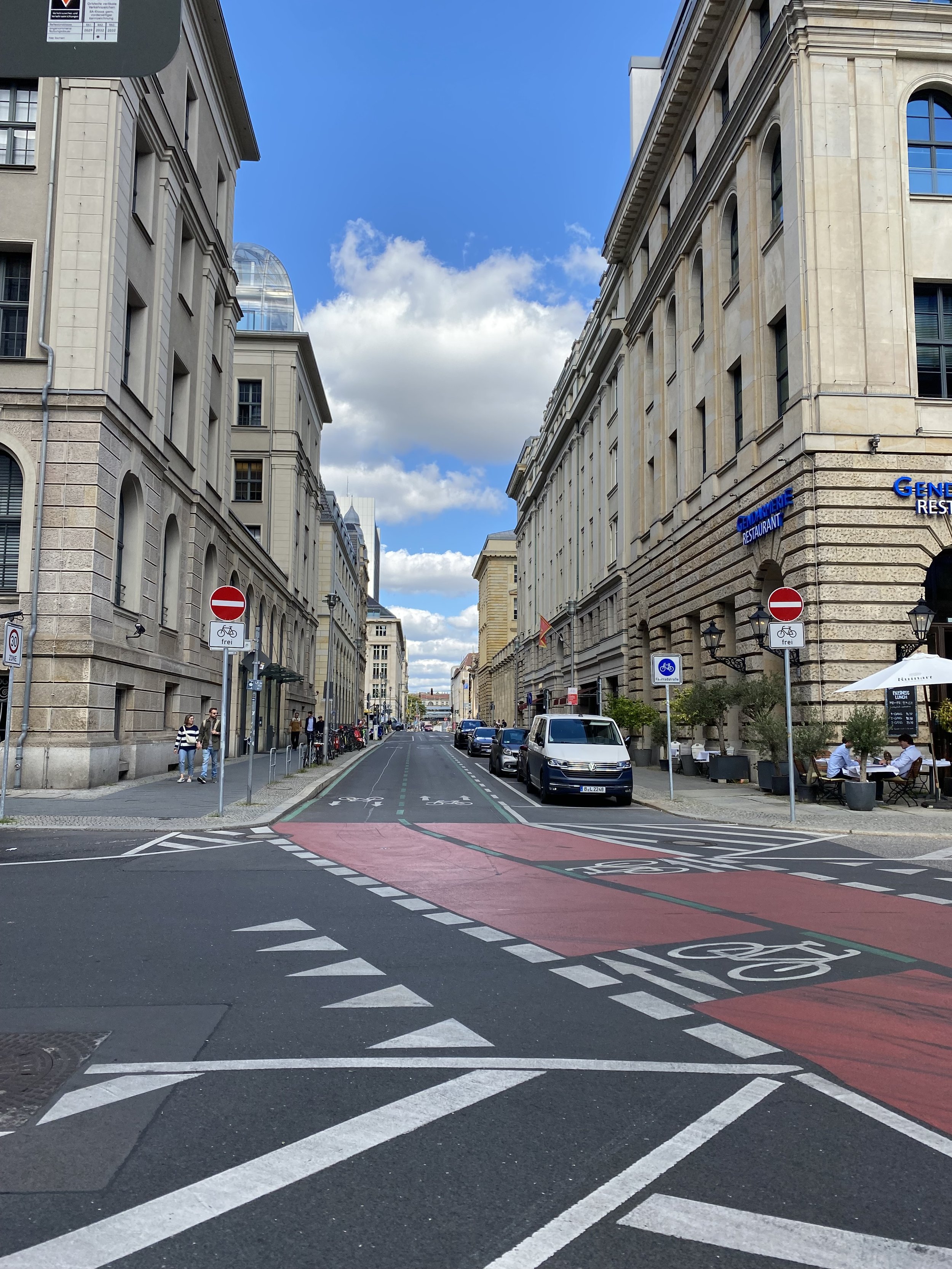
I found Berlin to be a very neat city. I loved the culture of cycling and it felt like a real convenience rather than a nuisance as it does in Sydney. I loved how fast the trains took off and moved from station to station. I loved how the excitement and thrill of the trip pretty much cancelled out any jet lag or tiredness that wouldn’t really hit me until the week following my return to Sydney.

I honestly didn’t have any burning desire to travel overseas before Berlin, but now I want to go everywhere.

Mostly, this trip inspired me to write more. The trip made me want to experience the feelings of excitement and fear meshed together again - the feeing of success that comes with being invited overseas to talk about your book at an international festival. I have fuel to continue writing, to produce more books, all with the hope that they might be good enough to land me this humbling experience again.

I picture myself - a 17 year old closeted Aboriginal boy growing up in a small country town, who had dreams of being a real writer one day but was also so filled with fear and self-hatred that he wasn’t sure he’d make it to a point in life where that was possible. If only he could have known that one day he would be on a stage in Berlin, talking to German secondary students about a book he wrote.

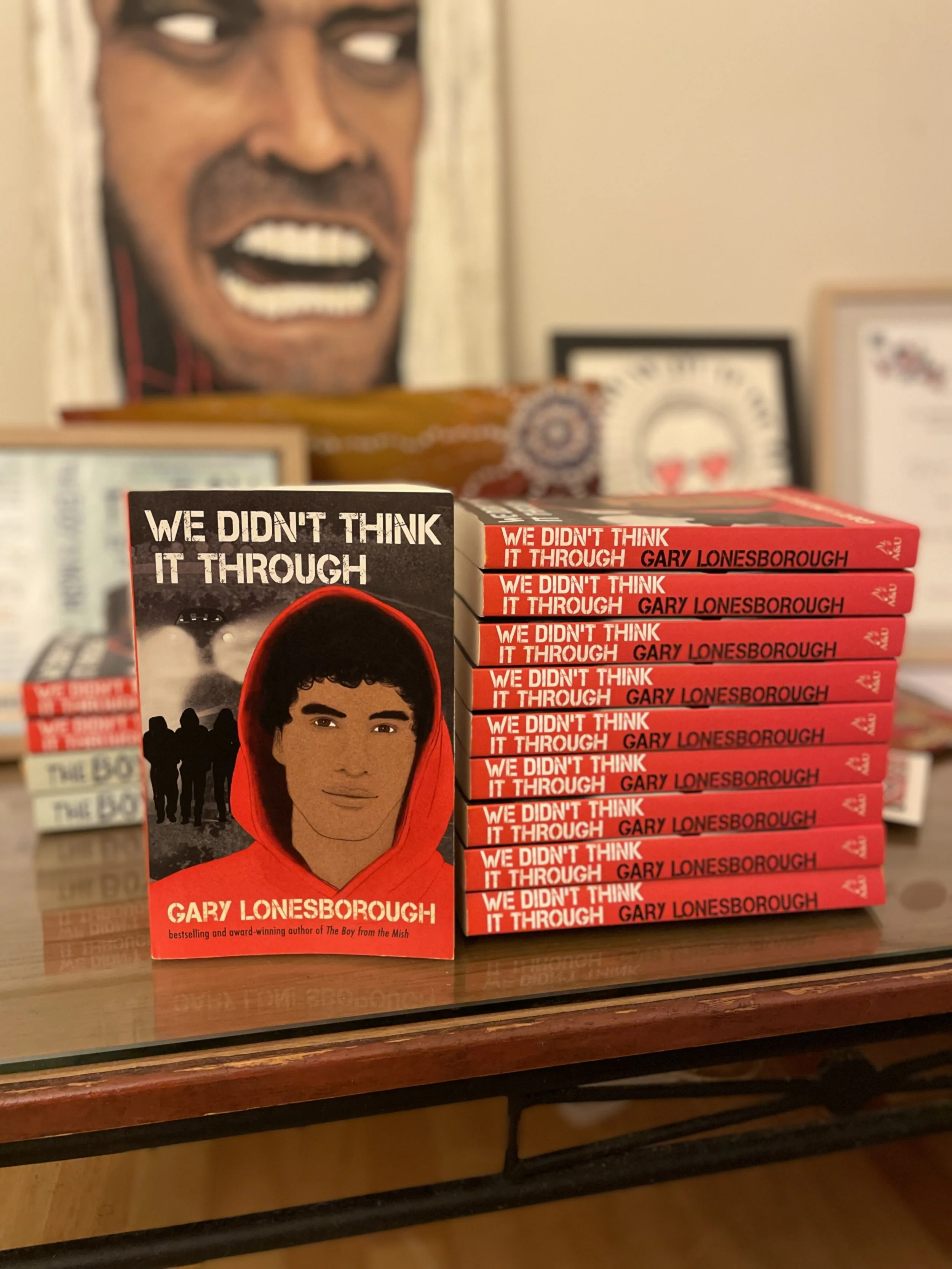
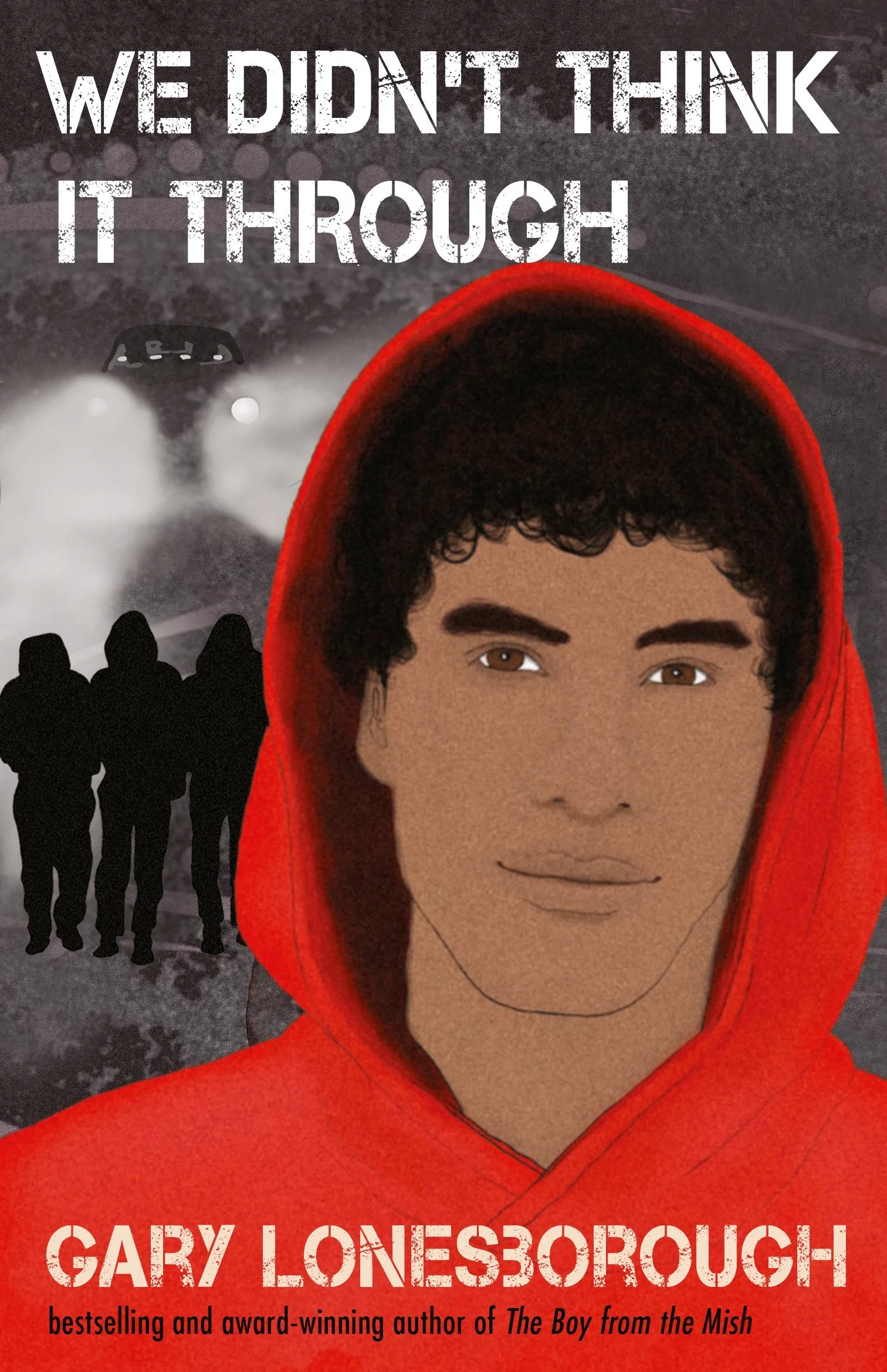
WE DIDN'T THINK IT THROUGH


I started writing this story in late 2019, a few weeks after receiving my publishing deal for The Boy from the Mish. For months, I had this character in my head who was a combination of Aboriginal boys I had worked with in youth justice centres. His name was Jamie and it was like he was hanging around my apartment trying to get me to notice him and hear his story. I know that sounds so cliche and even a bit pretentious, but it really felt like that.

Filled with momentum and joy from my publishing deal, I finally sat down at my desk and got to know Jamie. It all started with a crime of opportunity - the image of three Aboriginal boys in a stolen car, being chased by cops along a dark, dirt road in the black of night…

I have much more to say about this story and this character, but for now, I’ll leave you with my publisher’s blurb below!

WE DIDN’T THINK IT THROUGH is out in July 2023, and you can pre-order the book now!

From the author of the award-winning The Boy from the Mish, comes a compelling coming-of-age YA novel about sixteen-year-old Jamie Langton finding his future and navigating the challenges of racism, family and friendship in a small Australian town.

The thought comes to me: This is how I die. Dally is going to lose control and crash us into a pole or a house and we will be killed on impact.

The justice system characterises Jamie Langton as a 'danger to society', but he's just an Aboriginal kid, trying to find his way through adolescence.

Jamie lives in Dalton's Bay with Aunty Dawn and Uncle Bobby. He spends his downtime hanging out with his mates, Dally and Lenny. Mark Cassidy and his white mates - the Footy Heads - take every opportunity they can to bully Jamie and his friends. On Lenny's last night in town before moving to Sydney, after another episode of racist harassment, Jamie, Dally and Lenny decide to retaliate by vandalising Mark Cassidy's car. And when they discover the keys are in the ignition… Dally changes the plan. Soon they are all in Mark Cassidy's stolen car cruising through town, aiming to take it for a quick spin, then dump it.

But it's a bad plan. And as a consequence, Jamie ends up in the youth justice system where he must find a way to mend his relationships with himself, his friends, his family and his future.